Mounting the ductwork is a crucial step in establishing a ducted heater. This process, while described, can be taken care of effectively with a bit of preparation and the right tools. The ductwork acts as the network of paths that distribute cozy air from the heating device throughout your home, ensuring regular and comfy temperatures in every room.
To start, its essential to have a clear understanding of your homes format and the heating needs of each space. This will certainly aid in determining the most effective paths for the air ducts. Beginning by producing a comprehensive plan that includes the places of the heating system, the major trunk lines, and where the branches will certainly lead off to private vents. This plan will lead you through the installation procedure and assistance to lessen mistakes.
Once you have your strategy, collect your products. Youll require ductwork, connectors, hangers, and insulation, together with tools such as a tape measure, tin snips, and a drill. The type of ductwork you choose is necessary, with options ranging from flexible to inflexible metal ducts. Flexible air ducts are easier to set up and can navigate around barriers, yet stiff air ducts are a lot more resilient and effective in regards to air movement.
Start the installation by establishing the main trunk line, which will transfer air from the heating device to the rest of the system. Safeguard it firmly and make certain that it is effectively supported by hangers to prevent drooping, which can reduce performance. Next off, install the branch lines that will certainly prolong from the trunk line to the various rooms. As you do this, see to it to make use of the appropriate connectors to keep a tight seal and avoid air leakages.
It is critical to protect the ductwork, specifically in locations that go through unheated areas like attics or cellars. Insulation aids to preserve the temperature of the air as it takes a trip with the air ducts, making certain that it reaches each space at the wanted warmth without shedding warm along the road.
Lastly, test the system to guarantee that every little thing is working correctly. Check for air leaks by running the system and feeling along the ductwork for any running away air. If you locate leakages, secure them with duct tape or mastic. Make any required modifications to the air movement to guarantee that each room gets the suitable amount of heat.
Installing ductwork calls for precision and interest to information, but with cautious preparation and execution, it can be achieved effectively. The outcome is a dependable and efficient heating unit that keeps your home cozy and comfortable throughout the cooler months.
Connecting the Heating System
Linking the heating system is a critical action in the installation of ducted heating unit, a procedure that, when carried out correctly, guarantees the reliable and efficient distribution of heat throughout a home or structure. This job involves linking the main heating system, typically described as the heating system or heating system, to the network of air ducts that will carry cozy air to numerous areas. Making sure an appropriate link is crucial for the general performance of the heater, as it directly affects the power performance and comfort levels within the home.
To begin with, it is essential to have a clear understanding of the design of the building and the positioning of the heating system. The unit is normally mounted in a centralized place, such as a basement or laundry room, to enhance the circulation of warm. Prior to making any kind of connections, make certain that the unit is firmly in position which all safety and security protocols are complied with, consisting of disconnecting source of power and validating that gas lines, if applicable, are effectively sealed and fitted to prevent leakages.
The connection process begins with connecting the main plenum to the heating system. The plenum is the large air duct that acts as the primary channel for air distribution. It is vital to make certain that the plenum is appropriately lined up and securely attached to the heating device, as any voids or imbalances can cause air leakages, decreasing the performance of the system. Usage appropriate securing products, such as air duct mastic or metal-backed tape, to seal any seams or joints and stop loss of heated air.
Next, the ductwork that extends from the plenum to numerous components of the structure have to be linked. Top 10 Benefits of Ducted Heating Systems in 2026 . This entails attaching the major supply ducts to the plenum and then branching off to smaller air ducts that cause private rooms. Each link needs to be meticulously looked for secure installations and appropriate sealing to maintain the stability of the air circulation. Dampers might be set up within the ductwork to manage the circulation of air to various areas, enabling more precise control of temperatures in specific areas.
Additionally, it is essential to attach the return air ducts to the heating device. These ducts are accountable for bringing cooler air back to the device to be reheated. The return duct ought to be positioned tactically to make sure reliable air circulation throughout the structure. Proper insulation of these air ducts is additionally crucial to prevent heat loss and boost the total efficiency of the heating system.
Lastly, once all physical connections are made, it is important to examine the system. This involves powering up the heating device and looking for any kind of air leaks, uncommon noises, or irregular temperature circulation. Any problems must be resolved promptly to make sure the system operates at peak efficiency.
To conclude, linking the heating device in a ducted heating system calls for careful attention to information and adherence to security standards. By making sure that all links are safe and secure and properly secured, you can enhance the performance and integrity of your furnace, supplying regular heat and convenience throughout your home. This action, though relatively technical, is an important component of creating a comfortable living environment during the cooler months.
Evaluating the System
Examining the system is a critical phase in the installation of ducted heating, making certain that the configuration works effectively and safely. Besides the effort of preparation, selecting the appropriate components, and very carefully setting up the system, you wish to make sure that your brand-new ducted heating runs efficiently to give warmth and comfort throughout your home.
When the installation is total, the preliminary action in checking the system is to perform a visual evaluation. This includes examining all the connections and joints to guarantee they are safe and secure. Any kind of loosened or incorrectly linked air ducts can lead to significant ineffectiveness or even pose security threats. Its also necessary to verify that the thermostat is appropriately set up which all electrical connections are safe and appropriately protected.
Adhering to the aesthetic evaluation, the system needs to be powered on for a trial run. This is where you check the performance of the whole ducted heater. Start by establishing the thermostat to a higher temperature than the existing room temperature level to trigger the heater to activate. Pay attention for any type of uncommon sounds that may show concerns with the follower or the motor. The air flow must be consistent and equally dispersed throughout all the vents in your home.
It is also essential to look for any type of uncommon smells, which could recommend a problem with the heater or the warm exchanger. A minor smell of melting dust is typical throughout the initial few mins of operation, particularly if the system has actually not been utilized for an extended duration. Nonetheless, consistent odors need to be checked out immediately.
Additionally, gauging the outcome temperature at numerous vents will certainly help guarantee that the system is heating efficiently and that there are no obstructions or leakages in the ducts. The temperature must increase regularly and equally, mirroring that the system is distributing warmth as anticipated.
Finally, after the preliminary test run, check the system over a few days. This recurring monitoring will certainly help validate that the thermostat keeps the wanted temperature and that the system cycles on and off suitably. Any kind of irregularities in the system's efficiency ought to be attended to right away to avoid more concerns.
In recap, evaluating the system is an integral part of installing ducted heating. By conducting a thorough evaluation and checking the system's performance, you make sure that your heating solution is risk-free, reliable, and prepared to keep your home comfortable throughout the cooler months. This persistent approach not just safeguards your financial investment yet also ensures satisfaction for you and your household.
Last Examinations and Safety And Security Checks
Last Inspections and Safety and security Checks are essential elements in the procedure of setting up a ducted furnace. These steps make sure not only the appropriate performance of the system but additionally the safety and security and comfort of those that will be using it. As with any kind of considerable home improvement task, making the effort to thoroughly examine and validate the installation can stop future concerns and offer peace of mind.
When the installation of your ducted heating system is complete, conducting a last examination is crucial. This includes an extensive testimonial of the entire system to validate that all elements are appropriately mounted and functioning as intended. Begin by checking the thermostat to ensure it is properly calibrated and with the ability of accurately maintaining the wanted temperature. An incorrectly adjusted thermostat can cause ineffective heating and boosted energy expenses.
Next off, check out the ductwork to validate that it is firmly linked and free from any obstructions or leakages. Dripping ducts can lead to considerable warm loss, reducing the efficiency of the system and enhancing utility bills. Additionally, evaluate the vents to ensure they are open and unobstructed, permitting optimum airflow throughout the home.
The security of your heater is of utmost importance. Carrying out security checks entails several vital steps. Initially, confirm that all electrical connections are safe which there are no revealed wires that can posture a fire threat. If your system is gas-powered, look for any kind of gas leaks by using a gas leak detector or an option of soap and water applied to the links. If bubbles develop, there might be a leak that needs instant focus from an expert.
Ensure that the area around the heating system is free from any kind of combustible materials. This precaution minimizes the risk of accidental fires and enhances the general security of your home. Additionally, it is a good idea to set up carbon monoxide detectors near the heating unit and in living areas to check for any kind of harmful levels of this odorless, anemic gas.
Finally, it is valuable to execute a test run of the system to observe its performance. Turn on the heater and allow it to operate for a few cycles. Listen for any type of uncommon noises, such as rattling or banging, which might show loose components or various other issues that need addressing. Screen the systems capability to preserve a consistent temperature throughout the home.
Finally, last examinations and safety checks are vital to guaranteeing that your ducted heater is mounted correctly and runs securely. By making the effort to carry out these checks, you can prevent potential troubles, improve the systems effectiveness, and ensure a risk-free and comfy atmosphere for you and your family. Keep in mind, when unsure, speaking with a specialist can supply extra assurance and competence.
About Seasonal energy efficiency ratio
Cooling output divided by electricity input, as a standard for HVAC systems
The SEER rating of a unit is the cooling output during a typical cooling-season divided by the total electric energy input during the same period. The higher the unit's SEER rating the more energy efficient it is. In the U.S., the SEER is the ratio of cooling in British thermal units (BTUs) to the energy consumed in watt-hours.
For example, consider a 5000 BTU/h (1465-watt cooling capacity) air-conditioning unit, with a SEER of 10 BTU/(W·h), operating for a total of 1000 hours during an annual cooling season (e.g., 8 hours per day for 125 days).
The energy efficiency ratio (EER) of a particular cooling device is the ratio of output cooling energy (in BTUs) to input electrical energy (in watt-hours) at a given operating point. EER is generally calculated using a 95 °F (35 °C) outside temperature and an inside (actually return-air) temperature of 80 °F (27 °C) and 50% relative humidity.
The EER is related to the coefficient of performance (COP) commonly used in thermodynamics, with the primary difference being that the COP of a cooling device is unit-less, because the numerator and denominator are expressed in the same units. The EER uses mixed units, so it does not have an immediate physical sense and is obtained by multiplying the COP by the conversion factor from BTUs to watt-hours: EER = 3.41214 × COP (see British thermal unit).
The seasonal energy efficiency ratio (SEER) is also the COP (or EER) expressed in BTU/watt-hour, but instead of being evaluated at a single operating condition, it represents the expected overall performance for a typical year's weather in a given location. The SEER is thus calculated with the same indoor temperature, but over a range of outside temperatures from 65 °F (18 °C) to 104 °F (40 °C), with a certain specified percentage of time in each of 8 bins spanning 5 °F (2.8 °C). There is no allowance for different climates in this rating, which is intended to give an indication of how the EER is affected by a range of outside temperatures over the course of a cooling season.
Typical EER for residential central cooling units = 0.875 × SEER. SEER is a higher value than EER for the same equipment.[1]
A more detailed method for converting SEER to EER uses this formula:
EER = −0.02 × SEER² + 1.12 × SEER[2] Note that this method is used for benchmark modeling only and is not appropriate for all climate conditions.[2]
A SEER of 13 is approximately equivalent to an EER of 11, and a COP of 3.2, which means that 3.2 units of heat are removed from indoors per unit of energy used to run the air conditioner.
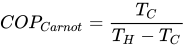
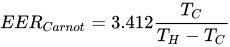
The SEER and EER of an air conditioner are limited by the laws of thermodynamics. The refrigeration process with the maximum possible efficiency is the Carnot cycle. The COP of an air conditioner using the Carnot cycle is:
where is the indoor temperature and is the outdoor temperature. Both temperatures must be measured using a thermodynamic temperature scale based at absolute zero such as Kelvin or Rankine. The EER is calculated by multiplying the COP by 3.412 BTU/W⋅h as described above:
Assuming an outdoor temperature of 95 °F (35 °C) and an indoor temperature of 80 °F (27 °C), the above equation gives (when temperatures are converted to the Kelvin or Rankine scales) a COP of 36, or an EER of 120. This is about 10 times more efficient than a typical home air conditioner available today.
The maximum EER decreases as the difference between the inside and outside air temperature increases, and vice versa. In a desert climate where the outdoor temperature is 120 °F (49 °C), the maximum COP drops to 13, or an EER of 46 (for an indoor temperature of 80 °F (27 °C)).
The maximum SEER can be calculated by averaging the maximum EER over the range of expected temperatures for the season.
SEER rating reflects overall system efficiency on a seasonal basis and EER reflects the system's energy efficiency at one specific operating condition. Both ratings are useful when choosing products, but the same rating must be used for comparisons.
Substantial energy savings can be obtained from more efficient systems. For example, by upgrading from SEER 9 to SEER 13, the power consumption is reduced by 30% (equal to 1 − 9/13).
With existing units that are still functional and well-maintained, when the time value of money is considered, retaining existing units rather than proactively replacing them may be the most cost effective. However, the efficiency of air conditioners can degrade significantly over time.[3]
But when either replacing equipment, or specifying new installations, a variety of SEERs are available. For most applications, the minimum or near-minimum SEER units are most cost effective, but the longer the cooling seasons, the higher the electricity costs, and the longer the purchasers will own the systems, the more that incrementally higher SEER units are justified. Residential split-system AC units of SEER 20 or more are now available. The higher SEER units typically have larger coils and multiple compressors, with some also having variable refrigerant flow and variable supply air flow.
In 1987 legislation taking effect in 1992 was passed requiring a minimum SEER rating of 10.[4] It is rare to see systems rated below SEER 9 in the United States because aging, existing units are being replaced with new, higher efficiency units.
Beginning in January 2006 a minimum SEER 13 was required.[5] The United States requires that residential systems manufactured after 2005 have a minimum SEER rating of 13. ENERGY STAR qualified Central Air Conditioners must have a SEER of at least 14.5. Window units are exempt from this law so their SEERs are still around 10.
In 2011 the US Department of Energy (DOE) revised energy conservation rules to impose elevated minimum standards and regional standards for residential HVAC systems.[6] The regional approach recognizes the differences in cost-optimization resulting from regional climate differences. For example, there is little cost benefit in having a very high SEER air conditioning unit in Maine, a state in the northeast US.
Starting January 1, 2015, split-system central air conditioners installed in the Southeastern Region of the United States of America must be at least 14 SEER. The Southeastern Region includes Alabama, Arkansas, Delaware, Florida, Georgia, Hawaii, Kentucky, Louisiana, Maryland, Mississippi, North Carolina, Oklahoma, South Carolina, Tennessee, Texas, and Virginia. Similarly, split-system central air conditioners installed in the Southwestern Region must be a minimum 14 SEER and 12.2 EER beginning on January 1, 2015. The Southwestern Region consists of Arizona, California, Nevada, and New Mexico. Split-system central air conditioners installed in all other states outside the Southeastern and Southwestern regions must continue to be a minimum of 13 SEER, which is the current national requirement.[6]
There have been many new advances in efficient technology over the past 10 years which have enabled manufacturers to increase their SEER ratings dramatically in order to stay above the required minimums set by the United States department of energy.[citation needed]
Effective January 1, 2023, cooling products will be subject to regional minimum efficiencies, according to Seasonal Energy Efficiency Ratio 2 (SEER2). New M1 testing procedure[7] is designed to better reflect current field conditions. DOE increases systems' external static pressure from current SEER (0.1 in. of water) to SEER2 (0.5 in. of water). These pressure conditions were devised to consider ducted systems that would be seen in the field. With this change, new nomenclature will be used to denote M1 ratings (including EER2 and HSPF2).[8]
Electric power is usually measured in kilowatts (kW). Electric energy is usually measured in kilowatt-hours (kW·h). For example, if an electric load that draws 1.5 kW of electric power is operated for 8 hours, it uses 12 kW·h of electric energy. In the United States, a residential electric customer is charged based on the amount of electric energy used. On the customer bill, the electric utility states the amount of electric energy, in kilowatt-hours (kW·h), that the customer used since the last bill, and the cost of the energy per kilowatt-hour (kW·h).
Air-conditioner sizes are often given as "tons" of cooling, where 1 ton of cooling equals 12,000 BTU/h (3.5 kW). 1 ton of cooling equals the amount of power that needs to be applied continuously over a 24-hour period to melt 1 ton of ice.
The annual cost of electric energy consumed by an air conditioner may be calculated as follows:
An air-conditioning unit rated at 72,000 BTU/h (21 kW) (6 tons), with a SEER rating of 10, operates 1000 hours per year at an electric energy cost of $0.12 per kilowatt-hour (kW·h). What is the annual cost of the electric energy it uses?
A residence near Chicago has an air conditioner with a cooling capacity of 4 tons and an SEER rating of 10. The unit is operated 120 days each year for 8 hours per day (960 hours per year), and the electric energy cost is $0.10 per kilowatt-hour. What is its annual cost of operation in terms of electric energy? First, we convert tons of cooling to BTU/h:
Today there are mini-split (ductless) air conditioner units available with SEER ratings up to 42.[10][11] During the 2014 AHR Expo, Mitsubishi unveiled a new mini-split ductless AC unit with a SEER rating of 30.5.[12]GREE also released a 30.5 SEER rating mini split in 2015 as well.[13]Carrier launched a 42 SEER ductless air conditioner during 2018 Consumer electronic Show (CES), held in Las Vegas.[14] Traditional AC systems with ducts have maximum SEER ratings slightly below these levels. Also, practically, central systems will have an achieved energy efficiency ratio 10–20% lower than the nameplate rating due to the duct-related losses.
Additionally, there are ground-source residential AC units with SEER ratings up to 75.[15] However, ground-source heat pump effective efficiency is reliant on the temperature of the ground or water source used. Hot climates have a much higher ground or surface water temperature than cold climates and therefore will not be able to achieve such efficiencies. Moreover, the ARI rating scheme for ground-source heat pumps allows them to largely ignore required pump power in their ratings, making the achievable SEER values often practically lower than the highest efficiency air-source equipment—particularly for air cooling. There are a variety of technologies that will allow SEER and EER ratings to increase further in the near future.[16] Some of these technologies include rotary compressors, inverters, DC brushless motors, variable-speed drives, and integrated systems such as those found in solar-powered air conditioning.[16]
A refrigeration cycle can be operated as a heat pump to move heat from outdoors into a warmer house. A heat pump with a higher SEER rating for cooling mode would also usually be more efficient in heating mode, rated using HSPF. When operated in heating mode, a heat pump is typically more efficient than an electrical resistance heater. This is because a space heater can convert only the input electrical energy directly to output heat energy, while a heat pump transfers heat from outdoors. In heating mode, the coefficient of performance is the ratio of heat provided to the energy used by the unit. An ideal resistance heater converting 100% of its input electricity to output heat would have COP = 1, equivalent to a 3.4 EER. The heat pump becomes less efficient as the outside temperature decreases, and its performance may become comparable to a resistance heater. For a heat pump with the minimum 13 SEER cooling efficiency, this is typically below −10 °F (−23 °C).[17]
Lower temperatures may cause a heat pump to operate below the efficiency of a resistance heater, so conventional heat pumps often include heater coils or auxiliary heating from LP or natural gas to prevent low efficiency operation of the refrigeration cycle. "Cold climate" heat pumps are designed to optimize efficiency below 0 °F (−18 °C). As of 2023 heat pumps are marketed that will extract heat from outdoor temperatures as low as −40 °F (−40 °C). In the case of cold climates, water or ground-source heat pumps are often the most efficient solution. They use the relatively constant temperature of ground water or of water in a large buried loop to moderate the temperature differences in summer and winter and improve performance year round. The heat pump cycle is reversed in the summer to act as an air conditioner.
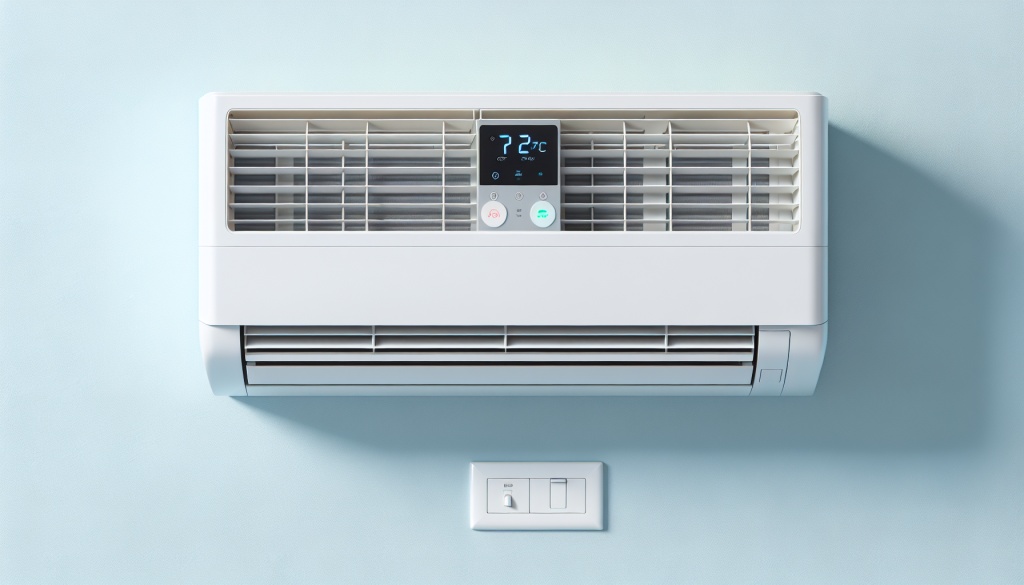
There are various types of air conditioners. Popular examples include: Window-mounted air conditioner (China, 2023); Ceiling-mounted cassette air conditioner (China, 2023); Wall-mounted air conditioner (Japan, 2020); Ceiling-mounted console (Also called ceiling suspended) air conditioner (China, 2023); and portable air conditioner (Vatican City, 2018).
Cooling of air in an enclosed space
This article is about cooling of air. For the Curved Air album, see Air Conditioning (album). For a similar device capable of both cooling and heating, see Heat pump.
"a/c" redirects here. For the abbreviation used in banking and book-keeping, see Account (disambiguation). For other uses, see AC.
Air conditioning, often abbreviated as A/C (US) or air con (UK),[1] is the process of removing heat from an enclosed space to achieve a more comfortable interior temperature and, in some cases, controlling the humidity of internal air. Air conditioning can be achieved using a mechanical 'air conditioner' or through other methods, such as passive cooling and ventilative cooling.[2][3] Air conditioning is a member of a family of systems and techniques that provide heating, ventilation, and air conditioning (HVAC).[4]Heat pumps are similar in many ways to air conditioners but use a reversing valve, allowing them to both heat and cool an enclosed space.[5]
Passive techniques remained widespread until the 20th century when they fell out of fashion and were replaced by powered air conditioning. Using information from engineering studies of traditional buildings, passive techniques are being revived and modified for 21st-century architectural designs.[13][12]
An array of air conditioner condenser units outside a commercial office building
Air conditioners allow the building's indoor environment to remain relatively constant, largely independent of changes in external weather conditions and internal heat loads. They also enable deep plan buildings to be created and have allowed people to live comfortably in hotter parts of the world.[14]
In 1558, Giambattista della Porta described a method of chilling ice to temperatures far below its freezing point by mixing it with potassium nitrate (then called "nitre") in his popular science book Natural Magic.[15][16][17] In 1620, Cornelis Drebbel demonstrated "Turning Summer into Winter" for James I of England, chilling part of the Great Hall of Westminster Abbey with an apparatus of troughs and vats.[18] Drebbel's contemporary Francis Bacon, like della Porta a believer in science communication, may not have been present at the demonstration, but in a book published later the same year, he described it as "experiment of artificial freezing" and said that "Nitre (or rather its spirit) is very cold, and hence nitre or salt when added to snow or ice intensifies the cold of the latter, the nitre by adding to its cold, but the salt by supplying activity to the cold of the snow."[15]
In 1758, Benjamin Franklin and John Hadley, a chemistry professor at the University of Cambridge, conducted experiments applying the principle of evaporation as a means to cool an object rapidly. Franklin and Hadley confirmed that the evaporation of highly volatile liquids (such as alcohol and ether) could be used to drive down the temperature of an object past the freezing point of water. They experimented with the bulb of a mercury-in-glass thermometer as their object. They used a bellows to speed up the evaporation. They lowered the temperature of the thermometer bulb down to −14 °C (7 °F) while the ambient temperature was 18 °C (64 °F). Franklin noted that soon after they passed the freezing point of water 0 °C (32 °F), a thin film of ice formed on the surface of the thermometer's bulb and that the ice mass was about
6 mm (1⁄4 in) thick when they stopped the experiment upon reaching −14 °C (7 °F). Franklin concluded: "From this experiment, one may see the possibility of freezing a man to death on a warm summer's day."[19]
The 19th century included many developments in compression technology. In 1820, English scientist and inventor Michael Faraday discovered that compressing and liquefying ammonia could chill air when the liquefied ammonia was allowed to evaporate.[20] In 1842, Florida physician John Gorrie used compressor technology to create ice, which he used to cool air for his patients in his hospital in Apalachicola, Florida. He hoped to eventually use his ice-making machine to regulate the temperature of buildings.[20][21] He envisioned centralized air conditioning that could cool entire cities. Gorrie was granted a patent in 1851,[22] but following the death of his main backer, he was not able to realize his invention.[23] In 1851, James Harrison created the first mechanical ice-making machine in Geelong, Australia, and was granted a patent for an ether vapor-compression refrigeration system in 1855 that produced three tons of ice per day.[24] In 1860, Harrison established a second ice company. He later entered the debate over competing against the American advantage of ice-refrigerated beef sales to the United Kingdom.[24]
Willis Carrier, who is credited with building the first modern electrical air conditioning unit
Electricity made the development of effective units possible. In 1901, American inventor Willis H. Carrier built what is considered the first modern electrical air conditioning unit.[25][26][27][28] In 1902, he installed his first air-conditioning system in the Sackett-Wilhelms Lithographing & Publishing Company in Brooklyn, New York.[29] He patented "air conditioning" in 1906,[30] and by 1914, the first domestic air conditioning was installed.[20] His invention controlled both the temperature and humidity, which helped maintain consistent paper dimensions and ink alignment at the printing plant. Later, together with six other employees, Carrier formed The Carrier Air Conditioning Company of America, a business that in 2020, employed 53,000 people and was valued at $18.6 billion.[31][32]
In 1906, Stuart W. Cramer of Charlotte, North Carolina, was exploring ways to add moisture to the air in his textile mill. Cramer coined the term "air conditioning" in a patent claim which he filed that year, where he suggested that air conditioning was analogous to "water conditioning", then a well-known process for making textiles easier to process.[33] He combined moisture with ventilation to "condition" and change the air in the factories, thus controlling the humidity that is necessary in textile plants. Willis Carrier adopted the term and incorporated it into the name of his company.[34]
Domestic air conditioning soon took off. In 1914, the first domestic air conditioning was installed in Minneapolis in the home of Charles Gilbert Gates. It is, however, possible that the considerable device (c. 2.1 m × 1.8 m × 6.1 m; 7 ft × 6 ft × 20 ft) was never used, as the house remained uninhabited[20] (Gates had already died in October 1913.)
In 1931, H.H. Schultz and J.Q. Sherman developed what would become the most common type of individual room air conditioner: one designed to sit on a window ledge. The units went on sale in 1932 at US$10,000 to $50,000 (the equivalent of $200,000 to $1,200,000 in 2024.)[20] A year later, the first air conditioning systems for cars were offered for sale.[35]Chrysler Motors introduced the first practical semi-portable air conditioning unit in 1935,[36] and Packard became the first automobile manufacturer to offer an air conditioning unit in its cars in 1939.[37]
Innovations in the latter half of the 20th century allowed more ubiquitous air conditioner use. In 1945, Robert Sherman of Lynn, Massachusetts, invented a portable, in-window air conditioner that cooled, heated, humidified, dehumidified, and filtered the air.[38] The first inverter air conditioners were released in 1980–1981.[39][40]
In 1954, Ned Cole, a 1939 architecture graduate from the University of Texas at Austin, developed the first experimental "suburb" with inbuilt air conditioning in each house. 22 homes were developed on a flat, treeless track in northwest Austin, Texas, and the community was christened the 'Austin Air-Conditioned Village.' The residents were subjected to a year-long study of the effects of air conditioning led by the nation's premier air conditioning companies, builders, and social scientists. In addition, researchers from UT's Health Service and Psychology Department studied the effects on the "artificially cooled humans." One of the more amusing discoveries was that each family reported being troubled with scorpions, the leading theory being that scorpions sought cool, shady places. Other reported changes in lifestyle were that mothers baked more, families ate heavier foods, and they were more apt to choose hot drinks.[41][42]
Air conditioner adoption tends to increase above around $10,000 (circa 2021) annual household income in warmer areas.[43] Global GDP growth explains around 85% of increased air condition adoption by 2050, while the remaining 15% can be explained by climate change.[43]
The urban heat island effect was first scientifically noted by Luke Howard in the 1810s, who described London being several degrees warmer than its rural surroundings at night. The phenomenon gained attention in the late 1960s, mainly in Japan and North America.[44][45]
From the late 1980s to early 2010s, studies began to link air conditioners to the urban heat island effect.[46][47][48] The phenomenon was observed in various cities such as Tokyo and Houston.
As of 2016[update], an estimated 1.6 billion air conditioning units were used worldwide, with over half of them in China and the United States, and with a total cooling capacity of 11,675 gigawatts.[49] The International Energy Agency predicted in 2018 that the number of air conditioning units would grow to around 4 billion units by 2050 and that the total cooling capacity would grow to around 23,000 GW, with the biggest increases in India and China.[8]
Between 1995 and 2004, the proportion of urban households in China with air conditioners increased from 8% to 70%.[50] Between 2010 and 2023, air conditioner use in India tripled to 24 units per 100 households,[51] with the most ownership in Haryana, Chandigarh, Rajasthan, and Delhi and the least in Meghalaya, Tripura, Manipur, and Himachal Pradesh.[52]
As of 2015[update], nearly 100 million homes in the United States, or about 87% of US households, had air conditioning systems.[53] In 2019, it was estimated that 90% of new single-family homes constructed in the US included air conditioning, ranging from 99% in the South to 62% in the West.[54][55]
Cooling in traditional air conditioner systems is accomplished using the vapor-compression cycle, which uses a refrigerant's forced circulation and phase change between gas and liquid to transfer heat.[57][58] The vapor-compression cycle can occur within a unitary, or packaged piece of equipment, or within a chiller that is connected to terminal cooling equipment (such as a fan coil unit in an air handler) on its evaporator side and heat rejection equipment such as a cooling tower on its condenser side. An air source heat pump shares many components with an air conditioning system, but includes a reversing valve, which allows the unit to be used to heat as well as cool a space.[59]
Air conditioning equipment will reduce the absolute humidity of the air processed by the system if the surface of the evaporator coil is significantly cooler than the dew point of the surrounding air. An air conditioner designed for an occupied space will typically achieve a 30% to 60% relative humidity in the occupied space.[60]
Most modern air-conditioning systems feature a dehumidification cycle during which the compressor runs. At the same time, the fan is slowed to reduce the evaporator temperature and condense more water. A dehumidifier uses the same refrigeration cycle but incorporates both the evaporator and the condenser into the same air path; the air first passes over the evaporator coil, where it is cooled[61] and dehumidified, before passing over the condenser coil, where it is warmed again before it is released back into the room.[citation needed]
Free cooling can sometimes be selected when the external air is cooler than the internal air. In this case, the compressor does not need to be used, resulting in high cooling efficiencies for these times. This may also be combined with seasonal thermal energy storage.[62]
Some air conditioning systems can reverse the refrigeration cycle and act as an air source heat pump, thus heating instead of cooling the indoor environment. They are also commonly referred to as "reverse cycle air conditioners". The heat pump is significantly more energy-efficient than electric resistance heating, because it moves energy from air or groundwater to the heated space and the heat from purchased electrical energy. When the heat pump is in heating mode, the indoor evaporator coil switches roles and becomes the condenser coil, producing heat. The outdoor condenser unit also switches roles to serve as the evaporator and discharges cold air (colder than the ambient outdoor air).
Most air source heat pumps become less efficient in outdoor temperatures lower than 4 °C or 40 °F.[63] This is partly because ice forms on the outdoor unit's heat exchanger coil, which blocks air flow over the coil. To compensate for this, the heat pump system must temporarily switch back into the regular air conditioning mode to switch the outdoor evaporator coil back to the condenser coil, to heat up and defrost. Therefore, some heat pump systems will have electric resistance heating in the indoor air path that is activated only in this mode to compensate for the temporary indoor air cooling, which would otherwise be uncomfortable in the winter.
Newer models have improved cold-weather performance, with efficient heating capacity down to −14 °F (−26 °C).[64][63][65] However, there is always a chance that the humidity that condenses on the heat exchanger of the outdoor unit could freeze, even in models that have improved cold-weather performance, requiring a defrosting cycle to be performed.
The icing problem becomes much more severe with lower outdoor temperatures, so heat pumps are sometimes installed in tandem with a more conventional form of heating, such as an electrical heater, a natural gas, heating oil, or wood-burning fireplace or central heating, which is used instead of or in addition to the heat pump during harsher winter temperatures. In this case, the heat pump is used efficiently during milder temperatures, and the system is switched to the conventional heat source when the outdoor temperature is lower.
The coefficient of performance (COP) of an air conditioning system is a ratio of useful heating or cooling provided to the work required.[66][67] Higher COPs equate to lower operating costs. The COP usually exceeds 1; however, the exact value is highly dependent on operating conditions, especially absolute temperature and relative temperature between sink and system, and is often graphed or averaged against expected conditions.[68] Air conditioner equipment power in the U.S. is often described in terms of "tons of refrigeration", with each approximately equal to the cooling power of one short ton (2,000 pounds (910 kg) of ice melting in a 24-hour period. The value is equal to 12,000 BTUIT per hour, or 3,517 watts.[69] Residential central air systems are usually from 1 to 5 tons (3.5 to 18 kW) in capacity.[citation needed]
Efficiency is strongly affected by the humidity of the air to be cooled. Dehumidifying the air before attempting to cool it can reduce subsequent cooling costs by as much as 90 percent. Thus, reducing dehumidifying costs can materially affect overall air conditioning costs.[71]
This type of controller uses an infraredLED to relay commands from a remote control to the air conditioner. The output of the infrared LED (like that of any infrared remote) is invisible to the human eye because its wavelength is beyond the range of visible light (940 nm). This system is commonly used on mini-split air conditioners because it is simple and portable. Some window and ducted central air conditioners uses it as well.
A wired controller, also called a "wired thermostat," is a device that controls an air conditioner by switching heating or cooling on or off. It uses different sensors to measure temperatures and actuate control operations. Mechanical thermostats commonly use bimetallic strips, converting a temperature change into mechanical displacement, to actuate control of the air conditioner. Electronic thermostats, instead, use a thermistor or other semiconductor sensor, processing temperature change as electronic signals to control the air conditioner.
These controllers are usually used in apartments, hospitals, offices and hotel rooms, because they are permanently installed into a wall and hard-wired directly into the air conditioner unit, eliminating the need for batteries.
Evaporator, indoor unit, or terminal, side of a ductless split-type air conditioner
Ductless systems (often mini-split, though there are now ducted mini-split) typically supply conditioned and heated air to a single or a few rooms of a building, without ducts and in a decentralized manner.[72] Multi-zone or multi-split systems are a common application of ductless systems and allow up to eight rooms (zones or locations) to be conditioned independently from each other, each with its indoor unit and simultaneously from a single outdoor unit.
The first mini-split system was sold in 1961 by Toshiba in Japan, and the first wall-mounted mini-split air conditioner was sold in 1968 in Japan by Mitsubishi Electric, where small home sizes motivated their development. The Mitsubishi model was the first air conditioner with a cross-flow fan.[73][74][75] In 1969, the first mini-split air conditioner was sold in the US.[76] Multi-zone ductless systems were invented by Daikin in 1973, and variable refrigerant flow systems (which can be thought of as larger multi-split systems) were also invented by Daikin in 1982. Both were first sold in Japan.[77] Variable refrigerant flow systems when compared with central plant cooling from an air handler, eliminate the need for large cool air ducts, air handlers, and chillers; instead cool refrigerant is transported through much smaller pipes to the indoor units in the spaces to be conditioned, thus allowing for less space above dropped ceilings and a lower structural impact, while also allowing for more individual and independent temperature control of spaces. The outdoor and indoor units can be spread across the building.[78] Variable refrigerant flow indoor units can also be turned off individually in unused spaces.[citation needed] The lower start-up power of VRF's DC inverter compressors and their inherent DC power requirements also allow VRF solar-powered heat pumps to be run using DC-providing solar panels.
Split-system central air conditioners consist of two heat exchangers, an outside unit (the condenser) from which heat is rejected to the environment and an internal heat exchanger (the evaporator, or Fan Coil Unit, FCU) with the piped refrigerant being circulated between the two. The FCU is then connected to the spaces to be cooled by ventilation ducts.[79] Floor standing air conditioners are similar to this type of air conditioner but sit within spaces that need cooling.
Industrial air conditioner cooling towers on top of the shopping mall Passage in Linz, Austria
Large central cooling plants may use intermediate coolant such as chilled water pumped into air handlers or fan coil units near or in the spaces to be cooled which then duct or deliver cold air into the spaces to be conditioned, rather than ducting cold air directly to these spaces from the plant, which is not done due to the low density and heat capacity of air, which would require impractically large ducts. The chilled water is cooled by chillers in the plant, which uses a refrigeration cycle to cool water, often transferring its heat to the atmosphere even in liquid-cooled chillers through the use of cooling towers. Chillers may be air- or liquid-cooled.[80][81]
A portable system has an indoor unit on wheels connected to an outdoor unit via flexible pipes, similar to a permanently fixed installed unit (such as a ductless split air conditioner).
Hose systems, which can be monoblock or air-to-air, are vented to the outside via air ducts. The monoblock type collects the water in a bucket or tray and stops when full. The air-to-air type re-evaporates the water, discharges it through the ducted hose, and can run continuously. Many but not all portable units draw indoor air and expel it outdoors through a single duct, negatively impacting their overall cooling efficiency.
Many portable air conditioners come with heat as well as a dehumidification function.[82]
Through-the-wall PTAC units, University Motor Inn, Philadelphia
The packaged terminal air conditioner (PTAC), through-the-wall, and window air conditioners are similar. These units are installed on a window frame or on a wall opening. The unit usually has an internal partition separating its indoor and outdoor sides, which contain the unit's condenser and evaporator, respectively. PTAC systems may be adapted to provide heating in cold weather, either directly by using an electric strip, gas, or other heaters, or by reversing the refrigerant flow to heat the interior and draw heat from the exterior air, converting the air conditioner into a heat pump. They may be installed in a wall opening with the help of a special sleeve on the wall and a custom grill that is flush with the wall and window air conditioners can also be installed in a window, but without a custom grill.[83]
Packaged air conditioners (also known as self-contained units)[84][85] are central systems that integrate into a single housing all the components of a split central system, and deliver air, possibly through ducts, to the spaces to be cooled. Depending on their construction they may be outdoors or indoors, on roofs (rooftop units),[86][87] draw the air to be conditioned from inside or outside a building and be water or air-cooled. Often, outdoor units are air-cooled while indoor units are liquid-cooled using a cooling tower.[79][88][89][90][91][92]
This compressor uses two interleaving scrolls to compress the refrigerant.[93] it consists of one fixed and one orbiting scrolls. This type of compressor is more efficient because it has 70 percent less moving parts than a reciprocating compressor. [citation needed]
This compressor use two very closely meshing spiral rotors to compress the gas. The gas enters at the suction side and moves through the threads as the screws rotate. The meshing rotors force the gas through the compressor, and the gas exits at the end of the screws. The working area is the inter-lobe volume between the male and female rotors. It is larger at the intake end, and decreases along the length of the rotors until the exhaust port. This change in volume is the compression. [citation needed]
There are several ways to modulate the cooling capacity in refrigeration or air conditioning and heating systems. The most common in air conditioning are: on-off cycling, hot gas bypass, use or not of liquid injection, manifold configurations of multiple compressors, mechanical modulation (also called digital), and inverter technology. [citation needed]
Hot gas bypass involves injecting a quantity of gas from discharge to the suction side. The compressor will keep operating at the same speed, but due to the bypass, the refrigerant mass flow circulating with the system is reduced, and thus the cooling capacity. This naturally causes the compressor to run uselessly during the periods when the bypass is operating. The turn down capacity varies between 0 and 100%.[94]
Several compressors can be installed in the system to provide the peak cooling capacity. Each compressor can run or not in order to stage the cooling capacity of the unit. The turn down capacity is either 0/33/66 or 100% for a trio configuration and either 0/50 or 100% for a tandem.[citation needed]
This internal mechanical capacity modulation is based on periodic compression process with a control valve, the two scroll set move apart stopping the compression for a given time period. This method varies refrigerant flow by changing the average time of compression, but not the actual speed of the motor. Despite an excellent turndown ratio – from 10 to 100% of the cooling capacity, mechanically modulated scrolls have high energy consumption as the motor continuously runs.[citation needed]
This system uses a variable-frequency drive (also called an Inverter) to control the speed of the compressor. The refrigerant flow rate is changed by the change in the speed of the compressor. The turn down ratio depends on the system configuration and manufacturer. It modulates from 15 or 25% up to 100% at full capacity with a single inverter from 12 to 100% with a hybrid tandem. This method is the most efficient way to modulate an air conditioner's capacity. It is up to 58% more efficient than a fixed speed system.[citation needed]
In hot weather, air conditioning can prevent heat stroke, dehydration due to excessive sweating, electrolyte imbalance, kidney failure, and other issues due to hyperthermia.[8][95]Heat waves are the most lethal type of weather phenomenon in the United States.[96][97] A 2020 study found that areas with lower use of air conditioning correlated with higher rates of heat-related mortality and hospitalizations.[98] The August 2003 France heatwave resulted in approximately 15,000 deaths, where 80% of the victims were over 75 years old. In response, the French government required all retirement homes to have at least one air-conditioned room at 25 °C (77 °F) per floor during heatwaves.[8]
A 2021 report estimated that around 345,000 people aged 65 and older died in 2019 from the heat, which is preventable with air conditioning. An estimated 190,000 heat-related deaths are averted annually owing to air conditioning.[99][100]
Air conditioning (including filtration, humidification, cooling and disinfection) can be used to provide a clean, safe, hypoallergenic atmosphere in hospital operating rooms and other environments where proper atmosphere is critical to patient safety and well-being. It is sometimes recommended for home use by people with allergies, especially mold.[101][102] However, poorly maintained water cooling towers can promote the growth and spread of microorganisms such as Legionella pneumophila, the infectious agent responsible for Legionnaires' disease. As long as the cooling tower is kept clean (usually by means of a chlorine treatment), these health hazards can be avoided or reduced. The state of New York has codified requirements for registration, maintenance, and testing of cooling towers to protect against Legionella.[103]
First designed to benefit targeted industries such as the press as well as large factories, the invention quickly spread to public agencies and administrations with studies with claims of increased productivity close to 24% in places equipped with air conditioning.[104]
Air conditioning contributed to the economic development of the American South after the 1950s by enabling industrial activities in hot climates and supporting the expansion of white-collar work in cooled office spaces. It also influenced urban sprawl and commuting patterns, as air-conditioned vehicles made suburban development more viable. Historians rank air conditioning among key factors shaping postwar metropolitan growth, alongside highways, automobiles, shopping malls, and suburban housing. [105]
Air conditioning caused various shifts in demography, notably that of the United States starting from the 1970s. In the US, the birth rate was lower in the spring than during other seasons until the 1970s but this difference then declined since then.[106] As of 2007[update], the Sun Belt contained 30% of the total US population while it was inhabited by 24% of Americans at the beginning of the 20th century.[107] Moreover, the summer mortality rate in the US, which had been higher in regions subject to a heat wave during the summer, also evened out.[7]
The spread of the use of air conditioning acts as a main driver for the growth of global demand of electricity.[108] According to a 2018 report from the International Energy Agency (IEA), it was revealed that the energy consumption for cooling in the United States, involving 328 million Americans, surpasses the combined energy consumption of 4.4 billion people in Africa, Latin America, the Middle East, and Asia (excluding China).[8] A 2020 survey found that an estimated 88% of all US households use AC, increasing to 93% when solely looking at homes built between 2010 and 2020.[109]
Air conditioner farm in the facade of a building in Singapore
Air conditioning used about 7% of global electricity in 2022, and emitted 3% of greenhouse gas.[110] A 2018 report on air conditioning efficiency by the International Energy Agency predicted an increase of electricity usage due to space cooling to around 6200 TWh by 2050,[8][111] and that with the progress currently seen, greenhouse gas emissions attributable to space cooling would double from 1,135 million tons (2016) to 2,070 million tons.[8] There is some push to increase the energy efficiency of air conditioners. United Nations Environment Programme (UNEP) and the IEA found that if air conditioners could be twice as effective as now, 460 billion tons of GHG could be cut over 40 years.[112] The UNEP and IEA also recommended legislation to decrease the use of hydrofluorocarbons, better building insulation, and more sustainable temperature-controlled food supply chains going forward.[112]
Refrigerants have also caused and continue to cause serious environmental issues, including ozone depletion and climate change, as several countries have not yet ratified the Kigali Amendment to reduce the consumption and production of hydrofluorocarbons.[113]CFCs and HCFCsrefrigerants such as R-12 and R-22, respectively, used within air conditioners have caused damage to the ozone layer,[114] and hydrofluorocarbon refrigerants such as R-410A and R-404A, which were designed to replace CFCs and HCFCs, are instead exacerbating climate change.[115] Both issues happen due to the venting of refrigerant to the atmosphere, such as during repairs. HFO refrigerants, used in some if not most new equipment, solve both issues with an ozone damage potential (ODP) of zero and a much lower global warming potential (GWP) in the single or double digits vs. the three or four digits of hydrofluorocarbons.[116]
Hydrofluorocarbons would have raised global temperatures by around 0.3–0.5 °C (0.5–0.9 °F) by 2100 without the Kigali Amendment. With the Kigali Amendment, the increase of global temperatures by 2100 due to hydrofluorocarbons is predicted to be around 0.06 °C (0.1 °F).[117]
Air conditioning units also contribute to pollution as they are difficult to disassemble or repair. Separating metal and plastic at the end of a unit's life cycle is also costly and not practical, meaning units are frequently disposed of.[100]
Alternatives are currently being explored by governments and researchers, such as more energy-efficient systems, passive cooling techniques, and the development of low-GWP refrigerants. However, balancing the demand for cooling with the need to reduce carbon footprints remains a complex and pressing issue.[121][119]
As renewable energy becomes cheaper[122] and more popular, the energy source of air conditioners is shifting towards more renewable energy sources.[119] This reduces the amount of carbon emissions resulting directly from generating electricity.
The danger of high-GWP refrigerants, such as HFCs, escaping into the atmosphere and trapping heat can be mitigated through development of low-GWP refrigerants.[99]
Socioeconomic groups with a household income below around $10,000 (circa 2021) tend to have a low air conditioning adoption,[43] which worsens heat-related mortality.[7] The lack of cooling can be hazardous, as areas with lower use of air conditioning correlate with higher rates of heat-related mortality and hospitalizations.[98] Premature mortality in NYC is projected to grow between 47% and 95% in 30 years, with lower-income and vulnerable populations most at risk.[98] Studies on the correlation between heat-related mortality and hospitalizations and living in low socioeconomic locations can be traced in Phoenix, Arizona,[123] Hong Kong,[124] China,[124] Japan,[125] and Italy.[126][127] Additionally, costs concerning health care can act as another barrier, as the lack of private health insurance during a 2009 heat wave in Australia, was associated with heat-related hospitalization.[127]
Disparities in socioeconomic status and access to air conditioning are connected by some to institutionalized racism, which leads to the association of specific marginalized communities with lower economic status, poorer health, residing in hotter neighborhoods, engaging in physically demanding labor, and experiencing limited access to cooling technologies such as air conditioning.[127] A study examining the US cities of Chicago, Detroit, Minneapolis, and Pittsburgh found that black households were half as likely to have central air conditioning units when compared to their white counterparts.[128] Especially in cities, redlining and other historical practices mean that racial disparities are also played out in heat islands, increasing temperatures in certain parts of the city.[127] This is due to heat-absorbing building materials and pavements and lack of vegetation and shade coverage.[129] There have been initiatives that provide cooling solutions to low-income communities, such as public cooling spaces.[8][129]
Cooling has allowed for growth of indoor home space and encouraged people, including children, to stay indoors more often.[130] It has also created uniformity of different geographical areas and climate zones.[131]
Alternatives to continual air conditioning include passive cooling, passive solar cooling, natural ventilation, operating shades to reduce solar gain, using trees, architectural shades, windows (and using window coatings) to reduce solar gain.[citation needed]
Buildings designed with passive air conditioning are generally less expensive to construct and maintain than buildings with conventional HVAC systems with lower energy demands.[132] While tens of air changes per hour, and cooling of tens of degrees, can be achieved with passive methods, site-specific microclimate must be taken into account, complicating building design.[12]
Many techniques can be used to increase comfort and reduce the temperature in buildings. These include evaporative cooling, selective shading, wind, thermal convection, and heat storage.[133]
The ventilation system of a regular earthshipDogtrot houses are designed to maximise natural ventilation.A roof turbine ventilator, colloquially known as a 'Whirly Bird', is an application of wind driven ventilation.
Passive ventilation is the process of supplying air to and removing air from an indoor space without using mechanical systems. It refers to the flow of external air to an indoor space as a result of pressure differences arising from natural forces.
There are two types of natural ventilation occurring in buildings: wind driven ventilation and buoyancy-driven ventilation. Wind driven ventilation arises from the different pressures created by wind around a building or structure, and openings being formed on the perimeter which then permit flow through the building. Buoyancy-driven ventilation occurs as a result of the directional buoyancy force that results from temperature differences between the interior and exterior.[134]
Since the internal heat gains which create temperature differences between the interior and exterior are created by natural processes, including the heat from people, and wind effects are variable, naturally ventilated buildings are sometimes called "breathing buildings".
Natural solutions do not require energy for cooling purposes, and are therefore a very attractive solution. Many ways to achieve this have been explored.
The structure of a building can help dissipate heat. For example, in Zimbabwe, Eastgate Development cut its energy use by 90% by utilizing termite mound inspired structures.[119]
Coverage of windows can help reduce internal heat gain from sunlight. The U.S. Department of Energy estimates that window awnings can lower internal heat gain from sunlight by up to 77%.[119]
The coating of roofs have also seen great success. In the United States, painting roofs white has been shown to lower roof temperatures by as much as 30 °C. Meanwhile, in China, a project involving the installation of green roofs — roofs covered with vegetation — not only reduced the cooling demands of buildings, but also lowered the average land surface temperature in the area by 0.91 °C.[119]
Planting trees can also help mitigate the heat island effect. A study in Europe discovered that tree cover can reduce land surface temperatures in cities by as much as 12 °C during the summer. In the United States, another study found that when tree cover reaches 40%, ground-level temperatures were lowered by nearly 6 °C.[119]
A traditional Iranian solar cooling design using a wind tower
Passive cooling is a building design approach that focuses on heat gain control and heat dissipation in a building in order to improve the indoor thermal comfort with low or no energy consumption.[135][136] This approach works either by preventing heat from entering the interior (heat gain prevention) or by removing heat from the building (natural cooling).[137]
Natural cooling utilizes on-site energy, available from the natural environment, combined with the architectural design of building components (e.g. building envelope), rather than mechanical systems to dissipate heat.[138] Therefore, natural cooling depends not only on the architectural design of the building but on how the site's natural resources are used as heat sinks (i.e. everything that absorbs or dissipates heat). Examples of on-site heat sinks are the upper atmosphere (night sky), the outdoor air (wind), and the earth/soil.
Passive cooling is an important tool for design of buildings for climate change adaptation – reducing dependency on energy-intensive air conditioning in warming environments.[139][140]
A pair of short windcatchers (malqaf) used in traditional architecture; wind is forced down on the windward side and leaves on the leeward side (cross-ventilation). In the absence of wind, the circulation can be driven with evaporative cooling in the inlet (which is also designed to catch dust). In the center, a shuksheika (roof lantern vent), used to shade the qa'a below while allowing hot air rise out of it (stack effect).[11]
PDRC applications on building roofs and envelopes have demonstrated significant decreases in energy consumption and costs.[143] In suburbansingle-family residential areas, PDRC application on roofs can potentially lower energy costs by 26% to 46%.[144] PDRCs are predicted to show a market size of ~$27 billion for indoor space cooling by 2025 and have undergone a surge in research and development since the 2010s.[145][146]
Hand fans have existed since prehistory. Large human-powered fans built into buildings include the punkah.
The 2nd-century Chinese inventor Ding Huan of the Han dynasty invented a rotary fan for air conditioning, with seven wheels 3 m (10 ft) in diameter and manually powered by prisoners.[147]: 99, 151, 233  In 747, Emperor Xuanzong (r. 712–762) of the Tang dynasty (618–907) had the Cool Hall (Liang Dian涼殿) built in the imperial palace, which the Tang Yulin describes as having water-powered fan wheels for air conditioning as well as rising jet streams of water from fountains. During the subsequent Song dynasty (960–1279), written sources mentioned the air conditioning rotary fan as even more widely used.[147]: 134, 151 
In areas that are cold at night or in winter, heat storage is used. Heat may be stored in earth or masonry; air is drawn past the masonry to heat or cool it.[13]
In areas that are below freezing at night in winter, snow and ice can be collected and stored in ice houses for later use in cooling.[13] This technique is over 3,700 years old in the Middle East.[148] Harvesting outdoor ice during winter and transporting and storing for use in summer was practiced by wealthy Europeans in the early 1600s,[15] and became popular in Europe and the Americas towards the end of the 1600s.[149] This practice was replaced by mechanical compression-cycle icemakers.
In dry, hot climates, the evaporative cooling effect may be used by placing water at the air intake, such that the draft draws air over water and then into the house. For this reason, it is sometimes said that the fountain, in the architecture of hot, arid climates, is like the fireplace in the architecture of cold climates.[11] Evaporative cooling also makes the air more humid, which can be beneficial in a dry desert climate.[150]
Evaporative coolers tend to feel as if they are not working during times of high humidity, when there is not much dry air with which the coolers can work to make the air as cool as possible for dwelling occupants. Unlike other types of air conditioners, evaporative coolers rely on the outside air to be channeled through cooler pads that cool the air before it reaches the inside of a house through its air duct system; this cooled outside air must be allowed to push the warmer air within the house out through an exhaust opening such as an open door or window.[151]
^ abcMohamed, Mady A.A. (January 2010). Lehmann, S.; Waer, H.A.; Al-Qawasmi, J. (eds.). Traditional Ways of Dealing with Climate in Egypt. The Seventh International Conference of Sustainable Architecture and Urban Development (SAUD 2010). Amman, Jordan: The Center for the Study of Architecture in Arab Region (CSAAR Press). pp. 247–266. Archived from the original on May 13, 2021. Retrieved May 12, 2021.
^Porta, Giambattista Della (1584). Magiae naturalis(PDF). London. LCCN09023451. Archived(PDF) from the original on May 13, 2021. Retrieved May 12, 2021. In our method I shall observe what our ancestors have said; then I shall show by my own experience, whether they be true or false
^Gulledge III, Charles; Knight, Dennis (February 11, 2016). "Heating, Ventilating, Air-Conditioning, And Refrigerating Engineering". National Institute of Building Sciences. Archived from the original on April 20, 2021. Retrieved May 12, 2021. Though he did not actually invent air-conditioning nor did he take the first documented scientific approach to applying it, Willis Carrier is credited with integrating the scientific method, engineering, and business of this developing technology and creating the industry we know today as air-conditioning.
See also: Cramer, Stuart W. (1906) "Recent development in air conditioning" in: Proceedings of the Tenth Annual Convention of the American Cotton Manufacturers Association Held at Asheville, North Carolina May 16–17, 1906. Charlotte, North Carolina, USA: Queen City Publishing Co. pp. 182-211.
See also: Cramer, Stuart W. (1906) "Recent development in air conditioning" in: Proceedings of the Tenth Annual Convention of the American Cotton Manufacturers Association Held at Asheville, North Carolina May 16–17, 1906. Charlotte, North Carolina, USA: Queen City Publishing Co. pp. 182-211.
^Lester, Paul (July 20, 2015). "History of Air Conditioning". United States Department of Energy. Archived from the original on June 5, 2020. Retrieved May 12, 2021.
^Cornish, Cheryl; Cooper, Stephen; Jenkins, Salima. Characteristics of New Housing (Report). United States Census Bureau. Archived from the original on April 11, 2021. Retrieved May 12, 2021.
^ ab"Cold Climate Air Source Heat Pump"(PDF). Minnesota Department of Commerce, Division of Energy Resources. Archived(PDF) from the original on January 2, 2022. Retrieved March 29, 2022.
^Evans, Paul (November 11, 2018). "RTU Rooftop Units explained". The Engineering Mindset. Archived from the original on January 15, 2021. Retrieved May 12, 2021.
^Glaeser, Edward L.; Tobio, Kristina (January 2008). "The Rise of the Sunbelt". Southern Economic Journal. 74 (3): 609–643. doi:10.1002/j.2325-8012.2008.tb00856.x.
^Santamouris, M.; Asimakoupolos, D. (1996). Passive cooling of buildings (1st ed.). London: James & James (Science Publishers) Ltd. ISBN978-1-873936-47-4.
^Leo Samuel, D.G.; Shiva Nagendra, S.M.; Maiya, M.P. (August 2013). "Passive alternatives to mechanical air conditioning of building: A review". Building and Environment. 66: 54–64. Bibcode:2013BuEnv..66...54S. doi:10.1016/j.buildenv.2013.04.016.
What is ducted heating and how does it work in a home setup?
Ducted heating is a type of central heating system that distributes warm air throughout a home via a series of ducts. The system typically consists of a central heating unit connected to a network of ducts, which deliver heated air to different rooms through vents.
What are the benefits of installing a ducted heating system for beginners?
Installing a ducted heating system offers several benefits, including consistent and even heating throughout the home, energy efficiency, and the ability to control the temperature in different zones. Its also discreet, as the ducts and vents are often hidden from view.
How can a beginner ensure the efficient operation of their ducted heating system?
To ensure efficient operation, beginners should regularly clean or replace filters, schedule annual maintenance checks, and ensure that vents and ducts are not obstructed. Proper insulation and sealing can also enhance the systems efficiency.